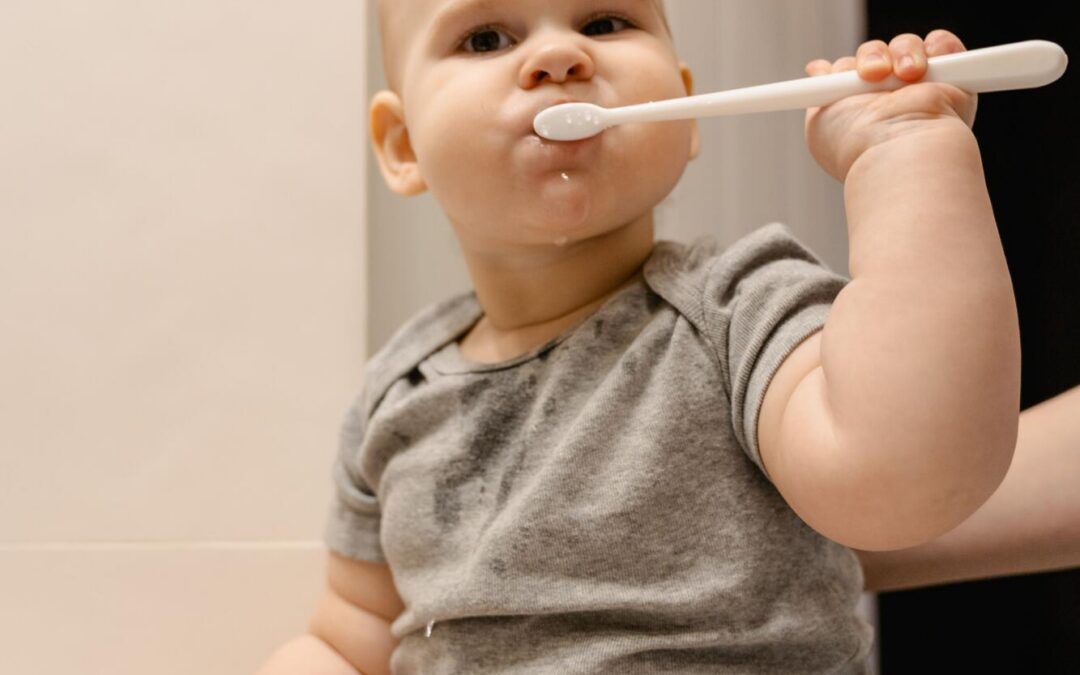
Infant teeth grinding is a common issue often linked to normal changes as babies explore their new teeth. Knowing the key baby teeth grinding causes and behaviors can ease concerns about infant dental health.
According to a 2025 Scientific Reports study, sleep bruxism ranges from 10.0% to 16.0% in adults and from 3.5% to 40.6% in children. In infants, teeth grinding is often associated with teething during periods of active tooth eruption.
For parents, recognizing the signs can make it easier to determine when the behavior warrants attention. Utilizing teething remedies helps soothe and stop baby teeth grinding.
Starting children’s dental care early establishes healthy habits for developing teeth.
What Is Infant Teeth Grinding?
Infant teeth grinding is also called bruxism. Teeth grinding involves repeatedly rubbing or clenching the teeth.
Parents may notice clicking or squeaking sounds when their baby grinds. While it can occur during the day or night, the sound may be more noticeable at night when the surrounding environment is quiet.
Occasional grinding usually causes no problems. However, frequent grinding deserves attention if teeth appear worn.
Tooth grinding leads to sore gums and changes in eating habits. Persistent symptoms or increased fussiness should warrant a dental evaluation.
What Are Some Common Baby Teeth Grinding Causes?
Several factors can contribute to baby teeth grinding. Teething discomfort is a common trigger experienced as new teeth push through the gums.
Babies sometimes grind to respond to the new and unfamiliar sensations in their mouths. Changes in sleep patterns can contribute as well.
Nasal congestion or discomfort influences nighttime grinding habits. An uneven bite can play a role as more teeth emerge.
Identifying the pattern can give parents useful context when monitoring grinding at home.
Is Teeth Grinding Normal During Teething?
Teething is the emergence of a baby’s first teeth breaking through the gums. The teething process often begins between the ages of 6 to 8 months and lasts until age 2.
Parents can expect about four teeth to erupt every 6 months until all primary baby teeth are in, around 30 months old (GoodRX). This stage often brings sore or tender gums that can make babies more likely to grind their teeth.
Teeth grinding often decreases once the new teeth have fully erupted.
What Teething Remedies Can Ease Discomfort?
Teething can make babies fussy when new teeth push through tender gums. Using a few simple remedies can ease that discomfort.
Offer a clean, chilled teething ring for gentle pressure on sore areas. Cold, soft foods like mashed banana help soothe babies who have started eating solids.
Avoid frozen objects, which can injure delicate gum tissue. Gently massage the gums with a clean finger.
Parents should avoid numbing gels unless recommended by a pediatric dentist for extra comfort.
How Does Infant Teeth Grinding Affect Infant Dental Health?
Grinding may affect infant dental health when it continues for extended periods. Repeated friction can gradually wear down the tooth surface.
Worn areas then become more sensitive during feedings. Grinding might also irritate the tissues surrounding emerging teeth.
Babies with significant tooth wear could develop changes in how their teeth meet. Parents should watch for visible changes in tooth shape or color.
Late teething in infants signals an underlying concern for appropriate dental evaluation as well as treatment or monitoring.
When Should Parents Worry About Baby Teeth Grinding?
Parents should contact a dentist if grinding becomes noticeably ongoing or stronger. Watch for chipped teeth or visibly flattened tooth surfaces.
Signs of facial swelling or jaw tenderness also warrant attention. Parents should seek professional advice if a baby struggles to open their mouth.
Difficulty chewing or refusing food signals added discomfort. Grinding accompanied by frequent crying during meals requires further evaluation.
A dentist can assess these warning signs and determine whether further care is needed.
How Can Parents Stop Baby Teeth Grinding?
Parents can reduce and stop baby teeth grinding by addressing the reasons for discomfort. Offer age-appropriate teething relief when sore gums trigger grinding.
Keep the baby’s sleep environment quiet and comfortable by maintaining calm, consistent bedtime routines. Avoid drawing attention to grinding, which may reinforce the behavior.
Track when the grinding occurs to identify possible triggers. If grinding continues, consult a pediatric dentist.
Professional guidance identifies pressing dental concerns requiring further evaluation or treatment.
When Should Children’s Dental Care Begin?
Make your baby’s first dental appointment after the eruption of the first tooth (around 6 months), and by his or her first birthday (HealthyChild.org).
The first visit allows dentists to monitor developing teeth and spot early signs of decay. Parents can then learn how to brush emerging teeth and protect them between appointments.
As more teeth appear, regular checkups provide continued monitoring of the child’s oral development.
Frequently Asked Questions
Can Pacifiers Contribute to Infant Teeth Grinding?
Pacifiers do not usually cause infant teeth grinding. Sucking provides a soothing action that can reduce fussiness around bedtime.
Some babies may clench or move their jaws while using a pacifier. Discuss chronic grinding or long-term pacifier use with a pediatric dentist.
Parents should observe if grinding appears more often with pacifier use.
Does Baby Teeth Grinding Cause Headaches?
Baby teeth grinding contributes to headaches when the jaw muscles remain tense for extended periods.
However, headaches are difficult to identify in infants because babies cannot describe pain. Telltale signs include increased fussiness or changes in sleep.
Jaw tenderness or a reluctance to chew provide additional clues of grinding causing discomfort.
Will Babies Outgrow Teeth Grinding?
Most babies gradually stop grinding as their mouths mature and teething settles.
The behavior often becomes less noticeable once emerging teeth are fully established. Grinding that continues frequently deserves attention.
Persistent patterns could signal an underlying dental concern that requires professional assessment as the child grows.
Make Your Child’s Dental Health a Priority at Beaumont Kids Dentistry in Lexington, KY, Today
Addressing infant teeth grinding early can protect developing teeth and identify signs that warrant professional attention. Parents should monitor changes in grinding patterns. A pediatric dentist provides expert guidance for ongoing concerns.
Beaumont Kids Dentistry, located in Lexington, KY, specializes in pediatric dentistry services for babies to teens. Dr. Jane-Katherine Jones is dedicated to providing personalized dental care that supports healthy smiles throughout childhood. Our practice creates a welcoming, kid-friendly environment where young patients feel comfortable during dental visits.
Contact Beaumont Kids Dentistry to schedule your child’s appointment with us today.